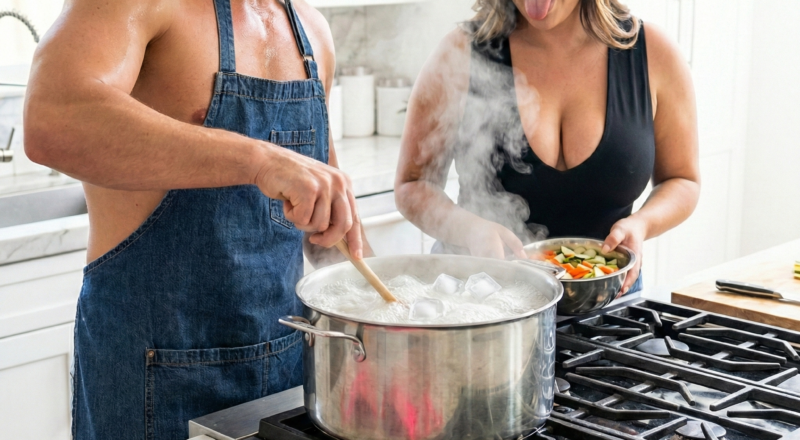
The modern kitchen is more than just a place to prepare food; it is a practical laboratory of chemistry and physics. Every time you turn on a burner, preheat an oven, or freeze leftovers, you are engaging with the fundamental laws of Thermodynamics. The mistake in our puzzle—ice cubes floating in furiously boiling water—is a violation of these laws, specifically the concepts of heat transfer and latent heat. While it makes for a tricky visual puzzle, understanding the real science behind cooking is essential for Home Economics, energy efficiency, and culinary success.
This article explores the science of heat in the kitchen, the economics of modern appliances, and how to optimize your home’s energy consumption while cooking.
- 1. The Physics of Phase Changes: Why the Image is Impossible
- 2. Kitchen Appliance Technology and Energy Efficiency
- 3. Home Safety and Risk Management
- 4. Culinary Science: The Maillard Reaction and Beyond
- 5. The Economics of Food Waste
- 6. The Psychology of the Kitchen
- 7. Water Quality and Filtration
- Conclusion: Respecting the Heat
1. The Physics of Phase Changes: Why the Image is Impossible
The glaring error in the image relates to water’s “Phase Changes.”
Latent Heat of Fusion: For ice (solid water) to turn into liquid water, it must absorb a specific amount of energy, known as the “latent heat of fusion.”
Latent Heat of Vaporization: For liquid water to turn into steam (boiling), it must absorb the “latent heat of vaporization.”
The Energy Bottleneck: When you apply heat to a pot containing both water and ice, *all* the thermal energy goes into melting the ice first. The water temperature will remain stuck at 0°C (32°F) until the very last shard of ice melts. Only *then* can the water temperature begin to rise toward boiling (100°C / 212°F). Therefore, seeing vigorous boiling *and* solid ice simultaneously is a physical impossibility under normal atmospheric conditions.
2. Kitchen Appliance Technology and Energy Efficiency
The gas stove in the image represents just one way to transfer heat. Choosing the right appliance has significant financial impacts.
Gas vs. Electric vs. Induction:
- Gas Ranges: Preferred by chefs for instant heat control, but they are inefficient. Much of the heat escapes around the sides of the pot into the room, forcing your HVAC System to work harder to cool the house.
- Electric Coils/Radiant: More efficient than gas at transferring heat to the pot, but slower to respond to temperature changes.
- Induction Cooktops: The gold standard of efficiency. They use electromagnetism to heat the cookware directly. They are 90%+ efficient, boil water faster than gas, and are safer because the surface remains relatively cool. Upgrading to induction is a common recommendation in Home Energy Audits.
Energy Star Ratings: When purchasing new appliances, checking the “Energy Star” rating is crucial. High-efficiency appliances may have a higher upfront cost but save thousands in utility bills over their lifespan.
3. Home Safety and Risk Management
The kitchen is statistically the most dangerous room in the house.
Burn Hazards and Fire Safety: The active burner and steam in the image highlight burn risks. Grease fires are a leading cause of home insurance claims. Knowing never to put water on a grease fire (use a lid or baking soda) is vital knowledge.
Carbon Monoxide (CO): Gas stoves emit carbon monoxide. Proper ventilation—using a high-quality Range Hood vented to the outside—is essential for indoor air quality and preventing CO poisoning. Homeowners should always have functional CO detectors installed near the kitchen.
4. Culinary Science: The Maillard Reaction and Beyond
Beyond boiling water, cooking is about mastering chemical reactions.
The Maillard Reaction: This is the chemical reaction between amino acids and reducing sugars that gives browned food its distinctive flavor (e.g., seared steak, toasted bread, roasted coffee). It occurs around 140°C to 165°C (280°F to 330°F). Mastering heat control to achieve this reaction without burning food is the mark of a skilled cook.
Sous Vide Technology: Modern kitchens increasingly use “Sous Vide” (under vacuum). This involves cooking food sealed in plastic bags in a precisely controlled water bath. It ensures perfect doneness every time by eliminating the temperature gradient found in traditional cooking methods.
5. The Economics of Food Waste
Efficient cooking isn’t just about energy; it’s about ingredients.
Food Preservation: The freezer (where ice is made) is a key tool in fighting food waste. The average household throws away thousands of dollars of food annually. Learning proper freezing techniques—blanching vegetables, using vacuum sealers to prevent freezer burn—is smart “Home Economics.”
Smart Kitchens and IoT: The “Internet of Things” (IoT) has entered the kitchen. Smart fridges can track expiration dates and suggest recipes based on what you have, further reducing waste. Smart ovens can be preheated remotely via smartphone apps.
6. The Psychology of the Kitchen
The interaction between the couple in the image highlights the social nature of the kitchen.
The Heart of the Home: In real estate, the kitchen is often the most valuable room. Open-concept designs that connect the kitchen to living spaces reflect its role as a communal hub. “Kitchen Remodels” offer the highest ROI (Return on Investment) of any home improvement project.
Comfort Food and Nostalgia: The smells and sounds of cooking trigger powerful memories. Psychologists study how “comfort foods” release dopamine and provide a sense of emotional security during stressful times.
7. Water Quality and Filtration
The water in the pot is a critical ingredient.
Hard Water vs. Soft Water: “Hard Water” contains high levels of minerals like calcium and magnesium. This can affect the taste of food (especially coffee and tea) and cause scale buildup in appliances, shortening their lifespan.
Home Water Filtration Systems: Many homeowners invest in reverse osmosis or carbon filtration systems to ensure pure cooking and drinking water. This is a growing segment of the home wellness market.
Conclusion: Respecting the Heat
The kitchen is a place of creation, but it is governed by immutable physical laws. The impossible pot in our puzzle serves as a reminder that nature has rules that cannot be broken. In the real world, understanding how heat, energy, and water interact doesn’t just make you a better cook; it makes you a safer, more efficient, and more fiscally responsible homeowner.
Scroll back up to the video. Did you see the ice? Did you see the rolling boil? Don’t let your eyes deceive your knowledge of physics.
