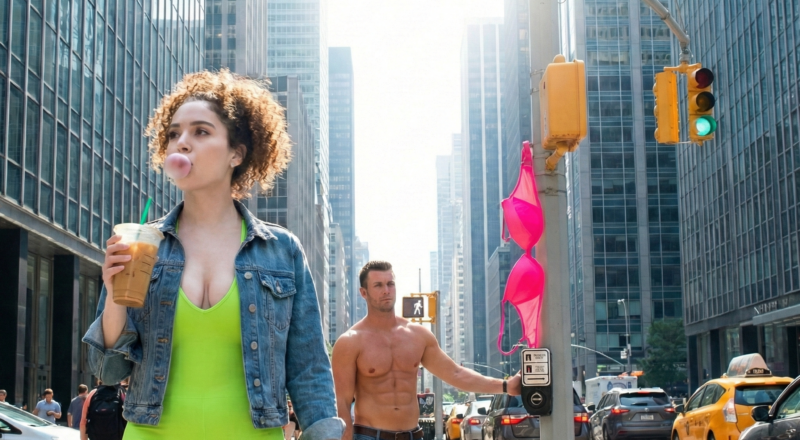
The modern city is a complex machine of movement. Every day, millions of vehicles, pedestrians, and cyclists interact in a choreographed dance of logistics governed by a system of signs, signals, and laws. At the heart of this system is the humble traffic light. Standardized globally (with minor variations), the vertical arrangement of Red-Yellow-Green is not just a design choice; it is a critical safety feature designed for colorblindness and instant recognition.
The mistake in our puzzle—a traffic light with Green on top—is a violation of the Manual on Uniform Traffic Control Devices (MUTCD). While it may seem like a minor detail, in the world of Traffic Engineering and Civil Liability, such an error could lead to catastrophic accidents and massive lawsuits. This article explores the science of traffic management, the psychology of driver behavior, the economics of Smart Cities, and the legal frameworks that keep our roads safe.
- 1. The Standardization of Traffic Signals: MUTCD and Global Norms
- 2. Traffic Engineering and Flow Management
- 3. The Economics of Road Safety and Insurance
- 4. Smart Cities and V2X Technology
- 5. Pedestrian Safety and Urban Design
- 6. The Psychology of Driver Behavior
- 7. Material Science of Traffic Infrastructure
- 8. Public Transport and Transit-Oriented Development (TOD)
- Conclusion: The Signal for Success
1. The Standardization of Traffic Signals: MUTCD and Global Norms
The error in the image is immediately recognizable to any experienced driver because of standardization.
The MUTCD Standard: In the United States, the Federal Highway Administration publishes the MUTCD, which legally defines how traffic signals must look. It dictates that for a vertical signal face, Red shall be at the top, Yellow in the center, and Green at the bottom.
Why Red is on Top:
- Visibility: The red light is the most critical signal (Stop). Placing it at the top ensures it is seen first and is least likely to be obscured by vehicles ahead.
- Colorblindness Accessibility: Approximately 1 in 12 men are colorblind (usually Red-Green colorblindness). By standardizing the position, a colorblind driver knows that the *top* light means Stop and the *bottom* light means Go, regardless of whether they can distinguish the specific hue. This is a prime example of Universal Design in public infrastructure.
- International Conventions: The 1968 Vienna Convention on Road Signs and Signals standardized these rules across most of Europe and Asia, facilitating international travel and trade logistics.
2. Traffic Engineering and Flow Management
The busy intersection in the background represents a challenge of efficiency.
Level of Service (LOS): Traffic engineers grade intersections on a scale from A (Free Flow) to F (Gridlock). The goal is to maximize flow while minimizing conflict points.
Signal Phasing and Timing: The timing of the lights is calculated using complex algorithms.
- Cycle Length: The total time to complete one sequence of signals. Longer cycles are used for high-volume intersections.
- Yellow Trap: The “Yellow Interval” (usually 3-5 seconds) is calculated based on the speed limit and the physics of braking distance. If it is too short, drivers are caught in the “Dilemma Zone”—unable to stop safely but unable to clear the intersection before Red. This often leads to rear-end collisions and liability claims.
Adaptive Traffic Control Systems (ATCS): Modern systems use AI and real-time sensors (like inductive loops cut into the asphalt) to adjust signal timing based on actual traffic demand, reducing idling time and vehicle emissions.
3. The Economics of Road Safety and Insurance
A confusing signal leads to accidents, which have a massive economic impact.
Auto Insurance Premiums: Insurance rates are determined by risk. Intersections with high accident rates (often due to poor design) lead to higher premiums for residents in that zip code.
Liability and Tort Law: If a municipality installs a non-compliant traffic signal (like the one in the puzzle), and an accident occurs, the city loses “Sovereign Immunity” and can be sued for negligence. Personal Injury Attorneys specialize in “Defective Roadway Design” cases, where settlements can reach millions of dollars.
The Cost of Congestion: Traffic jams cost the global economy billions in lost productivity and wasted fuel. “Congestion Pricing” (like in London or NYC) is an economic tool used to discourage driving during peak hours, using price signals to alter behavior.
4. Smart Cities and V2X Technology
The man holding the skateboard represents the future of multi-modal transport.
Vehicle-to-Everything (V2X) Communication: The future of traffic lights isn’t visual; it’s digital. V2X technology allows traffic signals to communicate directly with autonomous vehicles. The light tells the car it is about to turn red, and the car brakes automatically. This removes human reaction time from the equation.
Intelligent Transportation Systems (ITS): Smart cities integrate data from cameras, cell phones, and signals to manage the entire grid. In an emergency, ITS can turn all lights green for an ambulance, drastically reducing response times.
5. Pedestrian Safety and Urban Design
The woman waiting at the crosswalk highlights the “Vulnerable Road User.”
Vision Zero: Many cities have adopted “Vision Zero” policies, aiming to eliminate all traffic fatalities. Strategies include:
- Leading Pedestrian Intervals (LPI): Giving pedestrians a 3-7 second head start before cars get a green light. This makes pedestrians more visible in the crosswalk.
- Traffic Calming: Physical design changes like speed humps, curb extensions (bulb-outs), and road diets (reducing lanes) force drivers to slow down.
Walkability Scores: Real estate websites now list “Walk Scores.” Properties in high-walkability neighborhoods command a significant price premium, linking urban design directly to Real Estate Valuation.
6. The Psychology of Driver Behavior
Why do we stop at red lights? It is a social contract.
Aggressive Driving and Road Rage: Traffic congestion triggers the “Fight or Flight” response. Psychologists study how environmental factors (heat, noise, long wait times) increase aggression. Poorly timed lights are a major trigger for road rage.
The Dilemma of the Amber Light: Does Yellow mean “Slow Down” or “Speed Up”? Studies show that driver behavior at yellow lights is influenced by “Expectancy.” If a driver *expects* a long yellow, they are more likely to run it. Consistency in signaling is crucial for predictability and safety.
7. Material Science of Traffic Infrastructure
The hardware itself is a marvel of durability.
LED Technology: Old incandescent bulbs have been replaced by Light Emitting Diodes (LEDs). LEDs consume 90% less energy and last 10 times longer. However, they don’t produce heat, which led to a new problem: snow covering the lights in winter. Engineers had to design new heated lenses to solve this.
Reflectivity and Retroreflection: Road signs use “Retroreflective” sheeting (containing tiny glass beads or micro-prisms) to bounce headlight beams directly back to the driver’s eyes. This ensures visibility at night without electricity.
8. Public Transport and Transit-Oriented Development (TOD)
Reducing reliance on cars is the ultimate goal of modern planning.
Bus Rapid Transit (BRT): Giving buses dedicated lanes and signal priority (the light turns green for the bus) makes public transit faster than driving. This shifts the “Modal Split,” encouraging more people to ride.
Last-Mile Solutions: The skateboard in the image represents “Micro-mobility” (scooters, bikes, skateboards). Integrating these into the traffic grid requires protected bike lanes and safe storage, bridging the gap between the transit station and the final destination.
Conclusion: The Signal for Success
The traffic light is the silent conductor of the urban symphony. It relies on a universal language of color and position to keep us alive. When that language is scrambled—like the green light on top in our puzzle—chaos ensues.
By training your brain to spot the mistake in this intersection, you are practicing the situational awareness required to navigate the modern world safely. Whether you are walking, driving, or skating, the rules of the road are written in light.
Scroll back up to the image. Did you check the order? Did you remember the rules? Green goes below, Red stays high.
