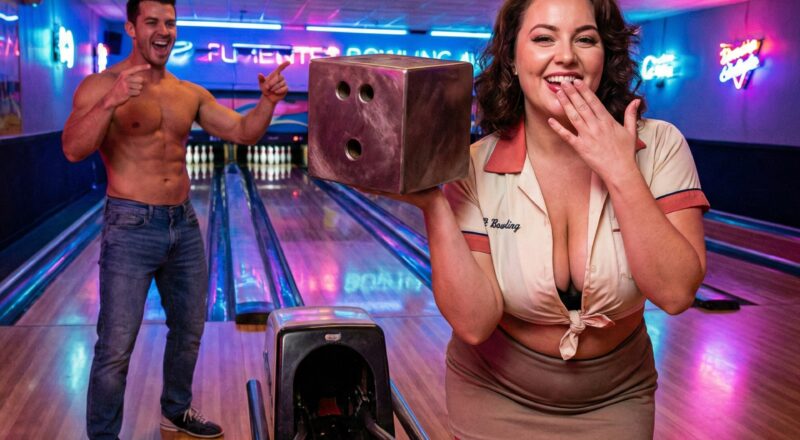
Bowling is one of the oldest forms of recreation, dating back to ancient Egypt. It is a game of precision, relying heavily on the laws of physics—specifically friction, momentum, and torque. The mistake in our puzzle—a cubic bowling ball—is a geometric impossibility in the context of the sport. While a cube might slide, it lacks the ability to roll efficiently, violating the principle of **Rotational Inertia**. In the real world, the engineering of bowling balls is a high-tech science, and the industry surrounding them is a multi-billion dollar sector of the **Experience Economy**.
This article explores the mechanics of hook potential, the chemistry of reactive resin coverstocks, and the financial trends driving the modern **Family Entertainment Center (FEC)**.
- 1. The Physics of Rolling: Sphere vs. Cube
- 2. Material Science: The Coverstock Revolution
- 3. The Economics of the Bowling Industry
- 4. Lane Maintenance and Oil Patterns
- 5. Pinsetter Technology and Automation
- 6. The Biomechanics of the Approach
- 7. Scoring Systems and Gamification
- 8. Bowling Shoe Hygiene and Rental Economics
- Conclusion: Stay in Your Lane
1. The Physics of Rolling: Sphere vs. Cube
The error in the image is fundamental.
Rolling Motion: For an object to roll, it must have a continuous curved surface. A sphere minimizes the contact area with the lane, allowing gravity and momentum to propel it forward with minimal energy loss. A cube has flat sides. To move, it would have to be dragged (sliding friction) or flipped over its edges, requiring massive energy input.
Center of Gravity: A bowling ball has a center of gravity block (the core) inside. By offsetting this weight, engineers create “imbalance” that causes the ball to hook. A cube’s center of gravity would prevent any smooth rotation, making it impossible to aim.
2. Material Science: The Coverstock Revolution
The shiny surface of the “ball” in the image represents decades of chemical engineering.
Plastic vs. Urethane vs. Reactive Resin:
- Plastic (Polyester): Used for spare balls. It is hard and smooth, offering low friction and going straight.
- Urethane: Introduced in the 1980s, this material allows the ball to grip the oil on the lane, creating a smooth arc.
- Reactive Resin: The modern standard for pros. These coverstocks have microscopic pores that absorb oil, increasing friction on the dry backend of the lane for an aggressive “snap” hook into the pins.
Oil Absorption: A high-performance ball creates its own friction. If you used a non-porous material (like the painted cube in the puzzle), it would simply hydroplane over the oil pattern.
3. The Economics of the Bowling Industry
The retro setting implies nostalgia, but the business is modernizing.
The Decline of League Play: In the mid-20th century, bowling was dominated by blue-collar leagues. This provided steady, recurring revenue for proprietors. Today, league participation has dropped, forcing alleys to pivot.
The Rise of the FEC: Modern centers are “Family Entertainment Centers.” They combine bowling with arcades, laser tag, and high-end food and beverage. The bowling lane is no longer the primary revenue driver; it is the “Anchor Attraction” that gets people in the door to spend money on $15 craft cocktails and pizza.
4. Lane Maintenance and Oil Patterns
The polished wood floor is not just clean; it is oiled.
Lane Oil: A thin layer of mineral oil is applied to the first 40 feet of the lane to protect the surface and guide the ball.
Invisible Difficulty: In sports like golf or tennis, you can see the hazards (sand traps, wind). In bowling, the hazard is invisible. The “Oil Pattern” determines the difficulty. A “House Shot” puts lots of oil in the middle (guiding the ball to the pocket), while a “Sport Shot” (PBA) is flat, punishing even slight inaccuracies.
Lane Machines: Automated robots (like the Kegel Walker) clean and oil the lanes daily. These machines cost upwards of $30,000, a significant capital expenditure for owners.
5. Pinsetter Technology and Automation
What happens after you throw the ball?
The Pinsetter: The machine that resets the pins is a marvel of mechanical engineering. Traditional “Free-Fall” pinsetters (like the Brunswick A-2) use complex elevators and rakes. They require skilled mechanics to maintain.
String Pinsetters: A controversial trend in the industry is the switch to “String Pinsetters,” where pins are attached to nylon cords. They are cheaper to operate and maintain but purists argue they change the physics of pin carry (making strikes easier or harder depending on the setup).
6. The Biomechanics of the Approach
The man cheering in the background has likely just finished his approach.
The 4-Step Approach: Bowling is all about timing. The swing of the arm must act as a pendulum, synchronized with the footsteps.
Carpal Tunnel and Tendonitis: The repetitive motion of swinging a 15-pound weight puts massive strain on the wrist and elbow. **Sports Medicine** professionals treat “Bowler’s Thumb” (nerve compression) and advise on proper grip pressure and fitting. A ball drilled specifically for your hand span reduces grip pressure by 50%.
7. Scoring Systems and Gamification
The days of paper scorecards are gone.
Automatic Scoring: Modern systems use cameras and sensors to track the ball’s speed, trajectory, and pin count.
Interactive Bowling: New technology like “HyperBowling” projects moving targets onto the lane bumpers, turning the game into a video game. This **Gamification** appeals to the younger, tech-savvy generation who may find traditional 10-pin bowling too slow.
8. Bowling Shoe Hygiene and Rental Economics
The shoes worn by the man are functional.
The Slide Sole: Bowling shoes have one sliding sole (leather/felt) and one braking sole (rubber). This allows the bowler to slide into the release, reducing knee strain.
The Rental Market: Why do you have to rent shoes? It’s not just for money ($3-$5 per pair). Street shoes have dirt and gravel that would scratch the delicate synthetic lane surface. However, the hygiene of rental shoes is a frequent customer complaint, driving sales of entry-level personal shoes.
Conclusion: Stay in Your Lane
Bowling is a game of consistency. It requires a repeatable motion and a reliable sphere. A cube introduces chaos into a system built for precision. It reminds us that in engineering, form must follow function.
By spotting the mistake in this alley, you are acknowledging the simple geometric truths that keep our world rolling.
Scroll back up to the image. Did you check the shape? Did you see the corners? Roll with the punches, but bowl with a sphere.
