The Einstein Mistake: Why Society Waits for You to Fail
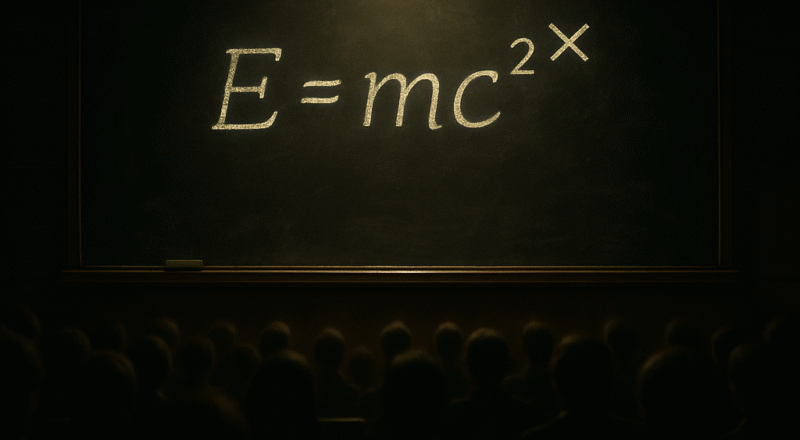
One day, Albert Einstein was teaching a class. He was writing on the board: 9 x 1 = 9, 9 x 2 = 18, and so on. When he got to 9 x 10, he wrote 91. The whole class started roaring with laughter. “Hey, Einstein made a mistake! It should be 90, not 91!” The students began to mock him. But Einstein waited patiently until everyone became silent. Once it was quiet, he said, “I gave nine correct answers. No one congratulated me for getting them right. But the moment I made just one mistake, all of you started making fun of me.”
The Hidden Lesson in a Classroom Gaffe
This simple story,whether it happened or not, carries a profound and universal truth about human nature and success. It’s not just a tale about a math error; it’s a powerful metaphor for the modern workplace, social media, and everyday life. The message is clear: your successes are often expected and quickly forgotten, but your failures are magnified and remembered.
Breaking Down the “Einstein Principle”
Let’s look closely at the key elements of this story and what they represent for us today.
Why We Focus on the Negative
Human brains have a natural negativity bias.From our earliest ancestors, spotting danger (a negative) was more critical for survival than noticing something pleasant (a positive). In today’s world, this translates into:
- The “Schadenfreude” Effect: This German word means deriving pleasure from another’s misfortune. Sometimes, seeing a highly successful person stumble can make others feel better about their own insecurities.
- The Perfection Myth: We often put successful people on a pedestal, believing they are infallible. When they prove to be human, the contrast is so stark that it becomes a major event.
- The News Cycle: Just look at the media. Scandals and failures get more clicks and views than stories of quiet, consistent success. We are conditioned to pay attention to what went wrong.
Redefining Your Relationship with Mistakes
Einstein’s calm response is the most important part of the story.He wasn’t flustered or ashamed. He used the moment to teach a larger lesson. To thrive, we must adopt this mindset.
- Mistakes are Data, Not Defeat: Every error provides valuable information on what doesn’t work, steering you closer to what does. Thomas Edison famously said he found 10,000 ways that wouldn’t work before inventing the lightbulb.
- They are Proof of Effort: If you are not making any mistakes, you are likely staying in your comfort zone and not challenging yourself. Mistakes are the scars of ambition and effort.
- Detach Your Self-Worth: Your value as a person is not defined by a single failure. Separate your identity from the outcome. You are not a failure because you failed; you are a learner who experienced a setback.
How to Stay Strong When the World Criticizes
So,how do you build the resilience that Einstein displayed?
- Acknowledge and Own It: Don’t hide your mistakes. Acknowledge them openly. This disarms critics and shows confidence and integrity.
- Focus on Your “Nine Right Answers”: Keep a “win journal” or a list of your accomplishments, big and small. When you feel down about one failure, look back at your many successes to regain perspective.
- Filter the Feedback: Learn to distinguish between constructive criticism aimed at helping you grow and mere mockery designed to bring you down. Value the former and disregard the latter.
The next time you face criticism for a misstep, remember the genius who wrote “91” on the board. Remember your own nine right answers. Let the noise of the crowd fade into the background, and stay focused on your process. Your journey is defined not by the mistakes you make, but by the courage you show in learning from them and moving forward, stronger and wiser than before.
