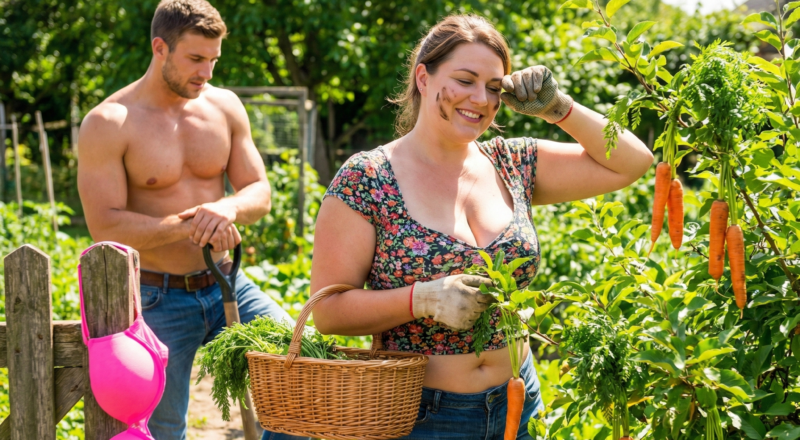
Agriculture is the foundation of civilization, a science that has been refined over 10,000 years. From Genetic Modification (GMOs) to organic permaculture, the way we grow food determines our health, our economy, and our environment. The mistake in our puzzle—carrots growing on a tree—is a fundamental botanical error. Understanding the difference between root vegetables, tubers, and fruit is not just trivia; it is the basis of **Agronomy** and food security.
This article explores the science of plant biology, the booming **Organic Food Market**, and the technological innovations driving the future of farming.
1. Botanical Classification: Roots vs. Fruits
The error in the image violates basic plant biology.
Root Vegetables: Carrots (Daucus carota) are taproots. They grow underground to store energy for the plant. The leafy greens visible above ground are the solar panels, but the edible part is hidden in the soil. Other root vegetables include beets, radishes, and turnips.
Fruits and Tubers:
- Fruits: Develop from the flower’s ovary and contain seeds (e.g., tomatoes, apples, cucumbers). These grow on vines, bushes, or trees.
- Tubers: Potatoes are tubers (underground stems), which are different from root vegetables but also grow underground.
Understanding these distinctions is crucial for **Crop Rotation**, a practice used to maintain soil health by alternating plant types.
2. The Economics of Organic Farming
The home garden in the image represents a growing trend toward self-sufficiency.
The Organic Premium: Organic food commands a higher price because it is grown without synthetic pesticides or fertilizers. The global organic market is worth over $100 billion.
Certification Costs: For a farm to be labeled “USDA Organic,” it must undergo rigorous and expensive inspections. This creates a barrier to entry for small farmers, who may follow organic practices but cannot afford the label (often called “Certified Naturally Grown”).
3. Vertical Farming and Hydroponics
If we run out of soil, where will we grow food?
Controlled Environment Agriculture (CEA): Vertical farming involves growing crops in stacked layers indoors, using LED lights and **Hydroponics** (water with nutrients, no soil). This technology allows for year-round production in urban centers, reducing transportation costs (“Food Miles”).
Water Efficiency: Hydroponic systems use up to 90% less water than traditional soil farming. As water scarcity increases due to climate change, these high-tech farms are becoming a major investment sector for **Venture Capital**.
4. Genetically Modified Organisms (GMOs)
The perfect appearance of vegetables often implies science at work.
CRISPR and Gene Editing: Scientists can now edit plant DNA to make crops resistant to drought, pests, or disease. While controversial, GMOs like “Golden Rice” (fortified with Vitamin A) have the potential to save millions of lives in developing nations.
Patent Law in Agriculture: Companies like Monsanto (Bayer) own the patents to specific seeds. Farmers must sign contracts promising not to save seed from year to year, creating a legal dependency that is hotly debated in **Agricultural Law**.
5. Soil Health and Carbon Sequestration
The soil the man is digging in is a living ecosystem.
Regenerative Agriculture: This approach focuses on restoring soil health through cover cropping and no-till farming. Healthy soil contains billions of microbes and fungi (Mycorrhizae) that help plants absorb nutrients.
Carbon Credits: Soil has the ability to store (sequester) massive amounts of carbon dioxide. Farmers are now being paid to adopt practices that lock carbon in the ground, creating a new revenue stream through **Carbon Credit Markets**.
6. Supply Chain Logistics and Food Waste
Getting food from farm to table is a logistical feat.
Cold Chain Management: Perishable items like carrots require continuous refrigeration. A breakdown in the “Cold Chain” leads to spoilage.
The “Ugly Food” Movement: Up to 40% of food is wasted, much of it because it doesn’t meet cosmetic standards (e.g., a crooked carrot). Startups like Misfits Market are monetizing this waste by selling “ugly” produce at a discount, appealing to eco-conscious consumers.
7. Urban Gardening and Mental Health
The smile on the woman’s face reflects the psychological benefits of gardening.
Horticultural Therapy: Doctors are increasingly prescribing gardening for anxiety and depression. Touching soil releases serotonin, and nurturing a living thing provides a sense of purpose.
Community Gardens: In “Food Deserts” (areas without access to fresh produce), community gardens provide vital nutrition and social cohesion. They are often protected by **Land Trusts** to prevent real estate development.
Conclusion: Rooted in Reality
Farming is a partnership with nature. We can optimize it, we can engineer it, but we cannot break its fundamental rules. A carrot will never grow on a tree, no matter how much we wish it were easier to harvest.
By spotting the mistake in this garden, you are reconnecting with the source of your food. In a world of supermarkets and processed meals, knowing how things actually grow is a revolutionary act.
Scroll back up to the image. Did you check the branches? Did you look for the roots? Nature knows its place.
