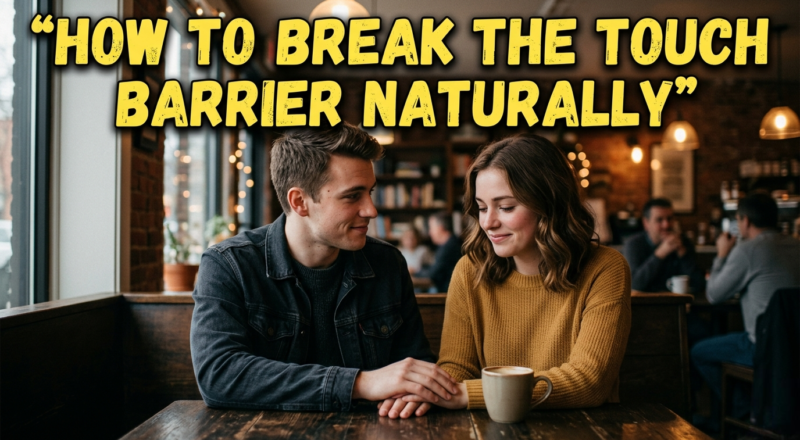
How to Break the Touch Barrier Naturally on a First Date
Breaking the touch barrier on a first date is one of the most misunderstood parts of attraction. Many people either avoid it completely or try too hard, and both approaches can quietly ruin the connection.
The truth is, physical touch isn’t about bold moves. It’s about natural progression, comfort, and timing. When done correctly, it builds attraction effortlessly. When done wrong, it creates awkwardness instantly.
- Why the Touch Barrier Feels Difficult
- The Biggest Mistake People Make
- What Actually Works: Gradual Progression
- Simple Ways to Introduce Touch Naturally
- Timing Is More Important Than Action
- How to Read Their Reaction
- The Role of Confidence and Calmness
- What to Avoid Completely
- Why This Matters in Attraction
- Final Thoughts
Why the Touch Barrier Feels Difficult
Most people hesitate because they are afraid of making the other person uncomfortable. This fear leads to overthinking, which makes actions feel unnatural.
- Fear of rejection
- Uncertainty about boundaries
- Lack of experience
- Overanalyzing every move
But here’s the key insight: touch becomes awkward only when it feels forced.
The Biggest Mistake People Make
The most common mistake is trying to “break the touch barrier” as a single big action.
For example:
- Suddenly touching without context
- Holding hands too early
- Forcing physical closeness
These actions feel unnatural because they skip the emotional buildup required for comfort.
What Actually Works: Gradual Progression
The right approach is to build touch step by step. Think of it as a natural flow rather than a planned move.
Here’s how progression works:
- Start with proximity (sitting closer naturally)
- Use situational touch (like guiding through a crowd)
- Add light, brief touches during conversation
- Increase comfort before increasing intensity
This gradual buildup makes touch feel normal instead of noticeable.
Simple Ways to Introduce Touch Naturally
You don’t need complicated techniques. Small, casual actions are enough.
- Lightly touching their arm while laughing
- High-fiving or playful gestures
- Brief touch on shoulder during a point
- Guiding them gently while walking
These actions feel natural because they are tied to the situation.
Timing Is More Important Than Action
Even the right touch can feel wrong if the timing is off.
Good timing happens when:
- The conversation is flowing
- Both of you are relaxed
- There is mutual engagement
Never force touch during silence or tension.
How to Read Their Reaction
Your success depends on how well you observe the other person’s response.
- If they smile or continue engaging → positive sign
- If they pull away slightly → slow down
- If they respond with similar touch → strong interest
Reading signals correctly is more important than initiating touch.
The Role of Confidence and Calmness
Your internal state directly affects how your actions are perceived.
If you feel nervous, your touch will feel uncertain. If you feel calm, your touch will feel natural.
Confidence doesn’t mean being bold. It means being relaxed and aware.
What to Avoid Completely
To keep things natural, avoid these mistakes:
- Overthinking every move
- Trying to impress through physical contact
- Ignoring the other person’s comfort level
- Repeating the same touch too often
Touch should feel effortless, not calculated.
Why This Matters in Attraction
Physical touch plays a key role in building attraction and connection. Without it, interactions can feel friendly but not romantic.
When done correctly, touch:
- Creates emotional closeness
- Builds trust
- Strengthens attraction
- Makes the interaction memorable
It’s not about doing more — it’s about doing it right.
Final Thoughts
Breaking the touch barrier naturally is about understanding comfort, timing, and progression. It’s not a trick or technique — it’s a skill developed through awareness.
Focus on being present, relaxed, and attentive. When you do that, touch happens naturally without forcing anything.
And when it feels natural, it never feels awkward.
