The Digital Resuscitation: How Books Can Save Us from Drowning in Screens
Introduction: The Silent Epidemic on Our Shores
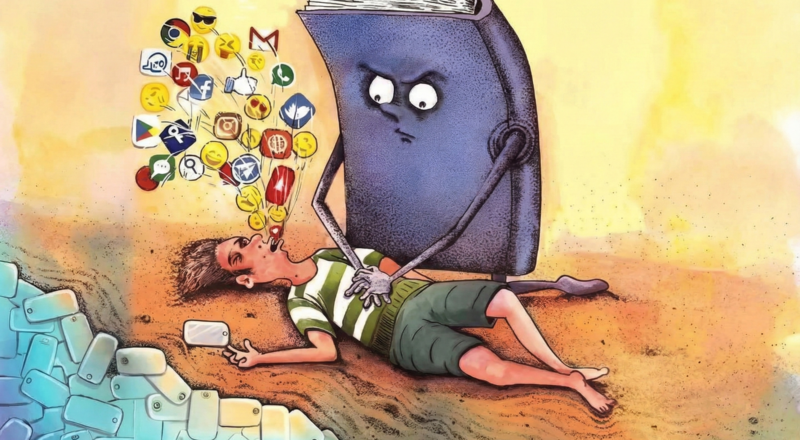
In the modern world, we face a silent crisis. It isn’t happening in the streets, but in the quiet corners of our living rooms, on our commutes, and even in our beds. It is the crisis of digital drowning. The image above perfectly illustrates this modern struggle: a young boy, unconscious and pale, washed ashore not by a natural tide, but by a relentless sea of smartphones, tablets, and glowing screens.
But there is a hero in this story. Standing over the boy is a personified Book—stern, determined, and physical. It is performing life-saving CPR. As the Book pumps the boy’s chest, we see the cause of his illness being expelled: a chaotic stream of emojis, notification badges, and social media logos. This powerful visual metaphor serves as a wake-up call for Western society, where screen time averages are skyrocketing, and mental clarity is plummeting.
The Sea of Screens: Understanding the Addiction
The Illusion of Connection
The “water” in the image is composed entirely of devices. In real life, these devices promise us connection. They promise that if we jump in, we will be part of a vast, exciting ocean of information. However, as the image suggests, it is easy to get in over our heads. The algorithm is designed to keep us submerged. We think we are swimming, but we are often just treading water, trying to keep up with an endless news cycle, viral trends, and the carefully curated lives of others.
The Physiology of “Drowning”
When a person drowns in water, their lungs fill with fluid, preventing oxygen from reaching the brain. When we “drown” in digital consumption, our minds fill with noise. This “noise” is represented in the image by the icons flying out of the boy’s mouth:
- The “Like” Button: Representing our need for external validation.
- The Angry Emoji: Symbolizing the outrage culture that keeps us stressed.
- The Play Button: The endless loop of short-form content that fragments our attention span.
This digital fluid blocks our ability to think deeply, to reflect, and to be present in the real world. We become numb, passive consumers rather than active participants in our own lives.
The Rescuer: Why “The Book” is the Cure
Why did the artist choose a physical book as the rescuer? Why not a computer or a podcast? The answer lies in the nature of reading versus scrolling.
Active vs. Passive Engagement
Scrolling is passive. You let the current take you where it wants. Reading a physical book, however, requires effort. You must turn the page. You must visualize the characters. You must follow a linear thought process for hours at a time. This mental effort is the “CPR” shown in the image. It forces the brain to work, to pump, and to function correctly again.
The Detox Process
Notice the expression on the Book’s face. It looks intense and serious. Saving a mind from digital addiction isn’t easy. It is hard work. When you first put down your phone and pick up a book, it feels uncomfortable. Your brain itches for the dopamine hit of a notification. This is the “vomiting” phase shown in the illustration. You have to expel the digital junk—the memes, the hot takes, the 15-second clips—before you can breathe fresh air again.
Practical Insights: How to Perform CPR on Your Own Mind
If you feel like the boy in the image—overwhelmed, tired, and mentally foggy—you don’t need to wait for a giant book to save you. You can save yourself. Here are practical steps to start your digital resuscitation:
1. Create “No-Swim” Zones
Just as you wouldn’t swim in dangerous waters, you shouldn’t have your phone in certain areas.
- The Bedroom: Buy an old-fashioned alarm clock. Leave the phone in the kitchen.
- The Dinner Table: Reconnect with the people physically in front of you.
2. The 30-Minute Reading Rule
Commit to reading a physical book for 30 minutes a day. It doesn’t matter if it is fiction, biography, or self-help. The goal is to train your focus.
- Pick a book that genuinely interests you (don’t force boring “classics” if you hate them).
- Put your phone in “Do Not Disturb” mode.
- Read until the timer goes off.
3. Curate Your Feed
If you must swim in the digital sea, wear a life jacket. Unfollow accounts that make you feel inadequate, angry, or anxious. If an app doesn’t bring you value, delete it. Reduce the volume of “water” you have to fight against.
Emotional Meaning: Reclaiming Your Humanity
The most touching part of this image is the boy’s vulnerability. He looks helpless. It reminds us that technology, for all its benefits, is a tool that can master us if we aren’t careful. We are losing the art of solitude. We are forgetting how to be bored, which is where creativity is born.
The Book represents tradition, wisdom, and a slower pace of life. It represents a time when we controlled our attention, rather than having it sold to advertisers. This image isn’t just about reading; it’s about reclaiming your humanity from the machine. It’s about choosing to be awake rather than unconscious.
Conclusion: The Takeaway
The image of the book performing CPR is a dramatic exaggeration, but the feeling it evokes is real. Many of us are gasping for air, weighed down by the pressure to be constantly “online.”
The lesson here is simple yet profound: To save your mind, you must disconnect to reconnect.
You have the power to crawl out of the sea of screens. The next time you feel yourself drowning in the infinite scroll, remember this image. Close the app. Put down the phone. Pick up a book. Let the stories, the knowledge, and the quiet wisdom pump life back into your imagination. Breathe again.
